
3 Day Full Body Workout for Beginners (Free Plan)
A 3 day full body workout for beginners with exact exercises, sets, reps and rest times, plus a weekly schedule, swaps for home and an 8-week progression.
Published
A 3 day full body workout for beginners means training your entire body in each session, three times per week, with a rest day between workouts, for example Monday, Wednesday and Friday. Each session includes one exercise for each major movement pattern (squat, hinge, push, pull and core) done for 2–3 sets of 8–12 reps. Below you will find the full plan with three different workouts, a weekly schedule, home-friendly swaps and an 8-week progression.
This article is the hands-on companion to our strength training for beginners guide. If you want the "why" behind sets, reps and progression, start there. If you want to get training today, read on.
Health check: if you have any medical condition, injury or have been inactive for a long time, talk to your doctor or a physiotherapist before starting. Stop any exercise that causes sharp pain.
Why full body training works so well for beginners
When you are new to lifting, much of your early progress comes from your nervous system learning the movements. The more often you practise a squat or a row, the faster you get good at it. Full body training lets you practise every pattern three times a week instead of once.
Other advantages:
- Missing a day is not a disaster. Every muscle still gets trained in the other sessions.
- Sessions stay balanced. You never end up with a week full of chest work and no back work.
- It fits around other sports. Runners, cyclists and team sport players can easily slot three short strength sessions into their week.
The weekly schedule
| Day | Session |
|---|---|
| Monday | Workout A |
| Tuesday | Rest or easy walk |
| Wednesday | Workout B |
| Thursday | Rest or light cardio |
| Friday | Workout C |
| Saturday | Optional activity (walk, hike, bike ride) |
| Sunday | Rest |
Any three non-consecutive days will work. Tuesday, Thursday and Saturday is just as good. What matters is the rest day between sessions. If you are wondering how much rest is enough, read how many rest days a week you really need.
Warm-up (do this before every session)
- 3–5 minutes of light cardio: brisk walking, cycling, rowing or skipping
- Bodyweight squats × 10
- Glute bridges × 10
- Band pull-aparts or arm circles × 10
- Cat-cow × 6 slow reps
- One or two light sets of your first exercise
Our mobility routine for beginners has more drills if your hips or shoulders feel stiff.
Workout A
| Exercise | Sets × reps | Rest |
|---|---|---|
| Goblet squat | 3 × 8–12 | 90 s |
| Dumbbell bench press | 3 × 8–12 | 90 s |
| One-arm dumbbell row | 3 × 8–12 per side | 60–90 s |
| Glute bridge | 2 × 12–15 | 60 s |
| Plank | 3 × 20–40 s | 45 s |
Workout B
| Exercise | Sets × reps | Rest |
|---|---|---|
| Romanian deadlift (dumbbells or barbell) | 3 × 8–12 | 2 min |
| Dumbbell overhead press | 3 × 8–12 | 90 s |
| Lat pulldown | 3 × 10–12 | 90 s |
| Reverse lunge | 2 × 8–10 per side | 60–90 s |
| Dead bug | 3 × 8 per side | 45 s |
Workout C
| Exercise | Sets × reps | Rest |
|---|---|---|
| Leg press or split squat | 3 × 10–12 | 90 s |
| Push-up (incline if needed) | 3 × as many good reps as possible, stop 2 short of failure | 60–90 s |
| Seated cable row or band row | 3 × 10–12 | 90 s |
| Hip thrust or single-leg glute bridge | 3 × 10–12 | 60–90 s |
| Farmer's carry | 3 × 30–40 m | 60 s |
Optional finisher (pick one if you have time)
- Bicep curls 2 × 12
- Tricep rope pushdowns 2 × 12
- Calf raises 2 × 15
These are nice extras, not essentials. If time is short, skip them.
How heavy should each set be?
Pick a weight that lets you complete the target reps with good technique while you could still do about two or three more. Beginners often call this "hard but clean". The final rep should be slower than the first, but your form should look the same.
If you want a more precise way to judge effort, the RPE and reps-in-reserve scales are explained in progressive overload explained.
The 8-week progression
The plan uses double progression. For every exercise, work within the rep range (for example 8–12). Add reps until you can do the top of the range on every set, then increase the weight by the smallest step available and start again at the bottom of the range.
| Week | Sets per exercise | Goal |
|---|---|---|
| 1 | 2 | Learn the movements, choose starting weights |
| 2 | 2–3 | Add a rep wherever form stays clean |
| 3–4 | 3 | Hit the top of the rep range, then add weight |
| 5–6 | 3 | Keep progressing, log every set |
| 7 | 3 | Push for small personal records with good form |
| 8 | 2 | Lighter week: same weights, fewer sets, then reassess |
Example log, Romanian deadlift:
| Week | Weight | Sets × reps achieved |
|---|---|---|
| 1 | 2 × 12 kg dumbbells | 2 × 10 |
| 2 | 2 × 12 kg | 3 × 11 |
| 3 | 2 × 12 kg | 3 × 12 |
| 4 | 2 × 14 kg | 3 × 9 |
| 5 | 2 × 14 kg | 3 × 11 |
| 6 | 2 × 14 kg | 3 × 12 |
| 7 | 2 × 16 kg | 3 × 9 |
Once you have a few weeks of training behind you, you can use our one rep max calculator to estimate your maximum from a set like "2 × 14 kg for 12 reps". It is a handy way to track strength over time without ever attempting a risky max lift.
Home and minimal-equipment swaps
No gym? No problem. Use these substitutions:
| Gym exercise | Home swap |
|---|---|
| Goblet squat | Backpack squat, bodyweight squat with a pause |
| Dumbbell bench press | Push-up or floor press with dumbbells |
| Lat pulldown | Resistance band pulldown, doorway row |
| Seated cable row | Band row, table row (under a sturdy table) |
| Leg press | Bulgarian split squat |
| Romanian deadlift | Single-leg Romanian deadlift, backpack RDL |
| Farmer's carry | Carry two full water jugs or heavy shopping bags |
For a completely equipment-free plan, see our home workout plan for beginners, and if you want to add bands, our resistance band workout for beginners shows how.
Technique cues for the main lifts
Goblet squat
- Hold the dumbbell close to your chest, elbows pointing down.
- Feet about shoulder-width, toes slightly out.
- Sit down between your heels, keep your chest proud, knees track over your toes.
Romanian deadlift
- Soft knees, push your hips back as if closing a car door with your bum.
- Keep the weights close to your legs and your back neutral.
- Stop when you feel a strong stretch in your hamstrings, then drive your hips forward.
Dumbbell row
- Support yourself on a bench with one hand and knee.
- Pull the dumbbell towards your hip, not your shoulder.
- Pause briefly at the top, lower with control.
Push-up
- Hands slightly wider than shoulders, body in one straight line.
- Lower your chest towards the floor, elbows at roughly 45 degrees.
- Use an incline (bench, table, wall) until you can do 8 clean reps on the floor.
If something still feels wrong after adjusting your form, ask a qualified trainer to check your technique in person.
Common mistakes with full body workouts
- Doing too many exercises. Five main exercises per session is plenty. More is not better if it makes you skip sessions.
- Training on consecutive days. You need the rest day between sessions for recovery.
- Same weight forever. Without progression the plan stops working. Log your sessions.
- Rushing the rest periods. If you rest only 30 seconds on squats, the next set suffers. Use a timer.
- Skipping the lighter week. Planned easier weeks help you recover and come back stronger.
Quick checklist before every session
- I know which workout (A, B or C) is on today
- I have my log with last session's weights and reps
- I have warmed up for 5–8 minutes
- I will stop each set with about 2–3 reps in reserve
- I will write down what I did before I leave
Consistency is the real secret behind any good plan. If you tend to fall off after a few weeks, our guide on how to build a workout habit is worth a read. Stick with this 3 day full body workout for eight weeks, keep adding small amounts of weight or reps, and you will be surprised how much stronger you feel.
FAQ
Is a 3 day full body workout good for beginners?
Yes. Training each muscle group three times a week gives you lots of practice with the key movements and plenty of recovery time between sessions. It is one of the most common and effective ways to start.
How long should a full body workout take?
Around 45 to 60 minutes including the warm-up is typical for the plan in this article. If you are short on time, cut the accessory exercises first and keep the main lifts.
Can I do a full body workout two days in a row?
It is better to leave at least one rest day in between, because the same muscles are trained every session. A Monday, Wednesday, Friday schedule works well for most people.
When should I switch from full body to a split?
There is no rush. Many people make steady progress on full body training for six months or longer. Consider a split when your sessions get too long or you want more volume for specific muscles.
From the shop
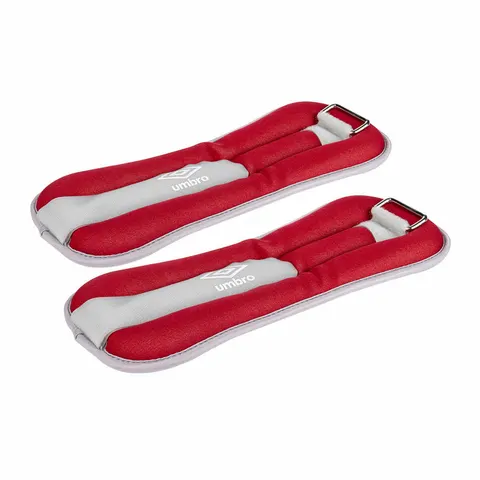
Umbro ankle and wrist weights, 2 × 1 kg, red
A pair of red 1 kg Umbro cuffs with hook-and-loop straps for leg and glute exercises once bodyweight gets easy.
Price: €15.99incl. VAT, plus shipping
Not available
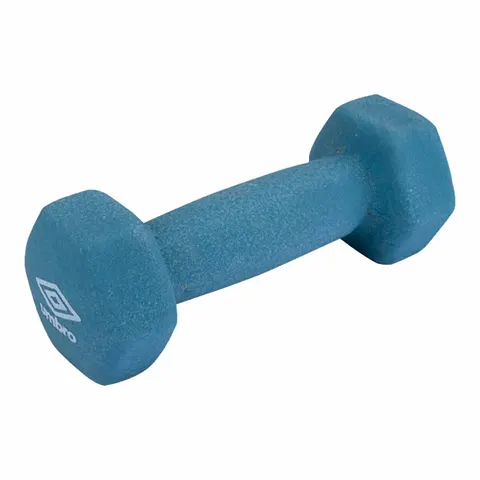
Umbro dumbbell 1 kg, coated, single
One light 1 kg Umbro dumbbell with a coated surface for arm and shoulder exercises, warm-ups and toning sessions at home.
Price: €7.99incl. VAT, plus shipping
Not available
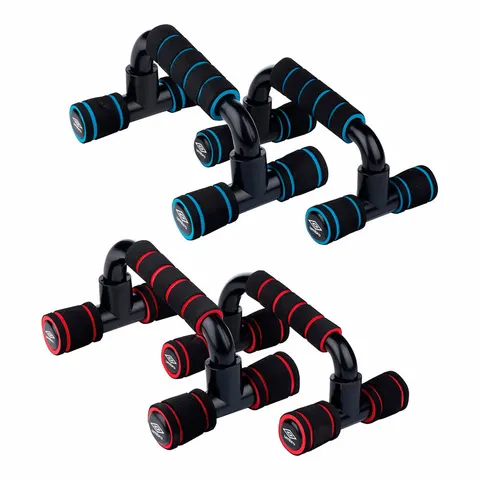
Umbro push-up bars, assorted designs
Umbro push-up stands for push-ups with a straight wrist and extra depth, a small upgrade for bodyweight training at home.
Price: €8.99incl. VAT, plus shipping
Not available
Related articles
Strength training
Strength Training for Beginners: The Complete Starter Guide
Strength training for beginners made simple: the key lifts, how many sets and reps, how often to train, how to progress and a 12-week starter plan.
9min read
Strength training
Progressive Overload Explained: How to Keep Getting Stronger
Progressive overload explained for beginners: six ways to progress, how to use RPE and reps in reserve, worked examples and a simple plan to avoid plateaus.
8min read
Strength training
Warm-Up Sets: How Many to Do and What Weight to Use
How many warm-up sets to do before lifting, what weight and reps to use, and how long to rest, with a simple template and two worked examples in kg.
8min read