
Mobility Routine for Beginners: 10 Minutes a Day
A simple 10-minute mobility routine for beginners: 8 moves for hips, spine, shoulders and ankles, with reps, progressions and a 4-week plan.
Published
A good mobility routine for beginners takes about 10 minutes, covers the main joints (ankles, hips, spine and shoulders) and uses slow, controlled movements rather than forceful stretching. Do the eight moves below on most days, in the morning, before a workout or on rest days, and progress gradually by adding range and control, not by pushing into pain. Consistency matters far more than intensity.
This guide gives you the routine, explains how to do each move, shows how to fit it into your week and lists the mistakes to avoid. No equipment is needed beyond a mat or a soft floor.
Mobility vs flexibility vs stretching
These words get mixed up, so here is the short version:
| Term | What it means | Example |
|---|---|---|
| Flexibility | How far a muscle can lengthen, often with help (gravity, your hands, a strap) | Sitting and reaching for your toes |
| Mobility | How well you can actively move a joint through its range with control | Lifting your knee high and rotating your hip in a circle |
| Static stretching | Holding a position for a period of time | Holding a calf stretch for 30 seconds |
| Dynamic stretching | Moving in and out of a stretch rhythmically | Leg swings |
Mobility training blends all of these. For everyday life, running and lifting, controlled movement is what counts: getting into a deep squat, reaching overhead or rotating your torso without strain.
Why beginners benefit from a mobility routine
- Feel less stiff. Many people sit for long periods, and gentle daily movement often helps the body feel looser.
- Better exercise positions. Squats, lunges and overhead presses are easier to learn when your joints move comfortably.
- A useful warm-up. A few minutes of mobility prepares you for a run or workout.
- Active recovery. On rest days, mobility gets you moving without adding fatigue. See how many rest days per week for ideas on planning those days.
- Body awareness. You learn how your joints feel and notice changes early.
Mobility work is not a cure for injuries or chronic pain. If you have a specific problem, a physiotherapist can give you exercises tailored to you.
The 10-minute beginner mobility routine
Move slowly, breathe steadily and stay in a comfortable range. Do the moves in order; the full sequence takes about 8–12 minutes.
| # | Exercise | Main area | Reps or time |
|---|---|---|---|
| 1 | Cat-cow | Spine | 8–10 slow reps |
| 2 | Thread the needle | Upper back, shoulders | 6 per side |
| 3 | World's greatest stretch | Hips, hamstrings, upper back | 4–5 per side |
| 4 | 90/90 hip switches | Hips | 6–8 per side |
| 5 | Deep squat hold | Hips, ankles, knees | 30–60 seconds |
| 6 | Knee-to-wall ankle rocks | Ankles, calves | 10 per side |
| 7 | Wall slides | Shoulders, upper back | 8–10 reps |
| 8 | Glute bridge with reach | Hips, front of hips | 8–10 reps |
1. Cat-cow
Start on hands and knees, hands under shoulders, knees under hips. Breathe in as you let your belly drop and lift your chest and tailbone. Breathe out as you round your back towards the ceiling and tuck your chin. Move one segment at a time, like a wave through your spine.
2. Thread the needle
From hands and knees, slide your right arm under your body towards the left, palm up, letting your right shoulder and head come down towards the floor. Pause, then reverse and reach the right arm up towards the ceiling, following it with your eyes. Repeat, then switch sides.
3. World's greatest stretch
Step your right foot forward into a long lunge, hands on the floor inside your front foot. Lower your back knee if you need to. Drop your right elbow towards your right instep, then rotate and reach your right arm to the ceiling. Return your hand to the floor, shift your hips back to straighten the front leg a little, then step back. Switch sides.
4. 90/90 hip switches
Sit on the floor with both knees bent at roughly 90 degrees, both legs falling to the right: right leg in front, left leg to the side. Keep your hands behind you for support. Slowly lift both knees and rotate them to the left. Keep the movement smooth. As it gets easier, try it without hand support.
5. Deep squat hold
Stand with feet about shoulder width apart, toes slightly out. Lower into a squat as deep as is comfortable, keeping your heels down. Hold onto a door frame, table or post if you need balance. Gently push your knees out with your elbows and breathe. If your heels lift, put a folded towel under them.
6. Knee-to-wall ankle rocks
Face a wall in a split stance, front foot a few centimetres from the wall. Keeping the heel down, gently push your knee forward to touch the wall, then return. If it is easy, move the foot slightly further back. This is a great one for runners and for anyone who struggles to squat with their heels down.
7. Wall slides
Stand with your back against a wall, feet a short distance in front. Place your arms against the wall in a "goalpost" position, elbows bent at 90 degrees. Slowly slide your arms up as far as you can while keeping contact with the wall, then slide back down. Do not force the range; it is fine if your hands do not touch the wall at first.
8. Glute bridge with reach
Lie on your back, knees bent, feet flat. Push through your heels to lift your hips, squeezing your glutes. At the top, reach both arms overhead towards the floor behind you. Lower slowly. This opens up the front of the hips, which often feel tight after sitting.
When to do your mobility routine
| Time | How to use it |
|---|---|
| Morning | Full routine, slow pace, to start the day loose |
| Before a workout or run | Moves 1, 3, 5 and 6 as a 5-minute warm-up, slightly faster pace |
| After training | Full routine; hold the end positions a little longer |
| Rest days | Full routine, or double it with a walk |
| Desk breaks | Moves 1, 5 and 7 in 3 minutes |
If you run, pair a short mobility warm-up with an easy start to your run. Our how to start running guide shows how to build a run-walk warm-up.
A 4-week mobility plan
The goal is to build a habit first, then expand. Track your sessions in a calendar or notes app.
| Week | Frequency | What to do |
|---|---|---|
| 1 | 4 days | Full routine, minimum reps, focus on learning each move |
| 2 | 5 days | Full routine, add 1–2 reps per exercise |
| 3 | 5–6 days | Full routine; hold the deep squat for 60 seconds |
| 4 | 5–6 days | Full routine plus one longer session (15–20 min) with extra time on your stiffest area |
After four weeks, keep the routine going and adjust it to your needs. Lifting on a three-day schedule? Use the warm-up version before each session of the full body workout for beginners, and the full version on rest days.
How to progress
Progression in mobility is subtle. Instead of adding weight, you add:
- Range: move a little further while keeping control.
- Control: slow down, pause at the end position.
- Time: hold the deep squat or end positions longer.
- Less support: fewer hands on the floor in the 90/90, no door frame in the squat.
- Load (later): some mobility work can be done with light weights, ideally once you are comfortable with the bodyweight version.
Common mobility mistakes
- Forcing the stretch. Bouncing into a position or pushing into pain does not speed things up.
- Holding your breath. Slow, steady breathing helps you relax into the range.
- Rushing. Speed turns mobility into flailing. Count slowly.
- Doing it only when sore. Daily practice brings the benefit; occasional long sessions do not.
- Copying advanced routines. Extreme splits and contortion poses are not needed for most goals.
- Ignoring warning signs. Numbness, tingling, sharp pain or joint instability are reasons to stop and seek professional advice.
Who should be careful
Check with a doctor or physiotherapist before starting a new mobility routine if you:
- Are recovering from surgery or a recent injury.
- Have joint hypermobility, osteoporosis or a diagnosed back condition.
- Are pregnant or postpartum.
- Feel pain, numbness or tingling during any of the moves.
Your mobility checklist
- 8 moves, about 10 minutes.
- Most days of the week, especially rest days.
- Slow, controlled, pain-free.
- Progress range, control and time gradually.
- Use a shorter version as a warm-up.
- Combine with sensible training and recovery; see the home workout plan for beginners if you want a full routine to pair it with.
Ten minutes is a small investment. Do it most days for a month and pay attention to how your body feels when you squat, reach and run.
FAQ
What is the difference between mobility and flexibility?
Flexibility is how far a muscle can be passively stretched. Mobility is how well you can actively move a joint through its range with control. A good mobility routine trains both, with an emphasis on controlled movement.
How often should I do a mobility routine?
Short and frequent works well: 5–10 minutes on most days is more useful than one long session a week. You can do it in the morning, as part of a warm-up, or on rest days.
Should mobility exercises hurt?
No. Aim for a gentle stretch or mild effort, never sharp pain. If a movement causes pain, make it smaller or skip it, and ask a physiotherapist if the pain persists.
Can I do mobility work before a workout?
Yes. Dynamic, controlled mobility moves make a good warm-up. Save longer, held stretches for after training or for separate sessions if you prefer.
From the shop
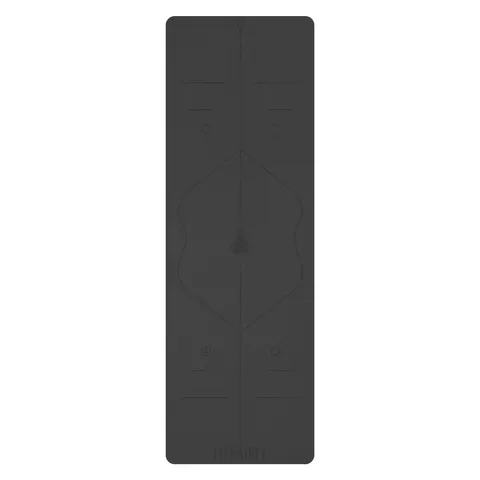
Fitpaddy yoga mat MAT01BL, TPE, 183 × 61 cm, black
A 6 mm TPE yoga mat from Fitpaddy with alignment lines, a carry cord and a weight under 1 kg, in black.
Price: €22.99incl. VAT, plus shipping
Not available
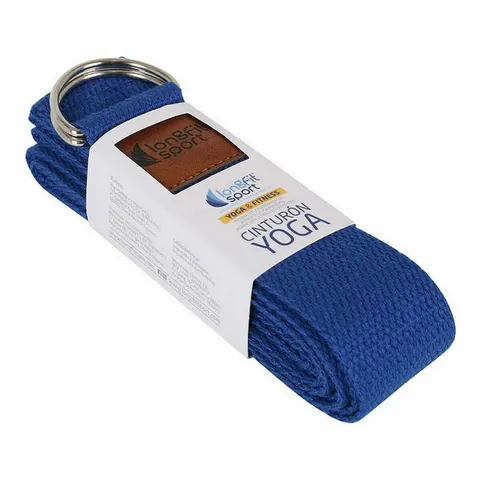
LongFit Sport yoga strap, blue
A simple blue yoga strap from LongFit Sport that helps you hold stretches you cannot yet reach with your hands.
Price: €6.99incl. VAT, plus shipping
Not available
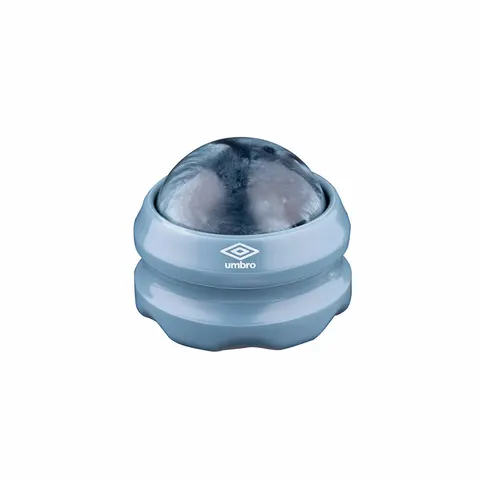
Umbro massage roller ball, blue
A hand-held blue massage roller ball from Umbro: hold the ribbed holder and roll the 360° ball over your muscles like a roll-on.
Price: €7.99incl. VAT, plus shipping
Not available
Related articles
Recovery & mobility
How Long Does Muscle Soreness Last? DOMS Explained
How long muscle soreness (DOMS) lasts after a workout, when it peaks, whether you can train while sore, what helps and the warning signs to get checked.
8min read
Recovery & mobility
How Many Rest Days a Week Do You Need? A Simple Guide
How many rest days a week you need depends on your training, sleep and experience. Sample schedules, signs you need more rest and what to do on rest days.
7min read
Strength training
Warm-Up Sets: How Many to Do and What Weight to Use
How many warm-up sets to do before lifting, what weight and reps to use, and how long to rest, with a simple template and two worked examples in kg.
8min read