
How Long Does Muscle Soreness Last? DOMS Explained
How long muscle soreness (DOMS) lasts after a workout, when it peaks, whether you can train while sore, what helps and the warning signs to get checked.
Published
Muscle soreness after a workout, often called DOMS (delayed onset muscle soreness), usually starts 12 to 24 hours after exercise, feels worst between about 24 and 72 hours, and fades within about a week, often within a few days. It is most common after a new exercise, a sudden jump in training or a long break. Mild soreness is normal and does not need special treatment. Pain that is sharp, lasts longer than a week or keeps getting worse should be checked by a doctor or physiotherapist.
The timeline above is based on information from the American College of Sports Medicine (ACSM) and the Human Performance Resources Center of the US Uniformed Services University. Below you will find why soreness happens, whether you can train while sore, what actually helps and the warning signs that are not normal soreness.
The typical DOMS timeline
Everyone is a little different, but most cases follow a similar pattern:
| Time after the workout | What you typically feel |
|---|---|
| During and right after | Often little or nothing beyond normal fatigue |
| 12–24 hours | Stiffness and tenderness start to appear |
| 24–72 hours | Soreness usually peaks: stairs, sitting down or lifting your arms may feel uncomfortable |
| 3–5 days | Gradually easing |
| About a week | Gone for most people |
The "delayed" in DOMS is the key point. Feeling fine the evening after a workout and very sore two days later is completely normal. It does not mean you did something wrong on the second day.
What causes muscle soreness?
Soreness tends to show up when muscles do something they are not used to. The most common explanation is tiny, microscopic stress in the muscle fibres, followed by a normal repair process. It is not caused by lactic acid building up in your muscles, which is a popular myth.
Typical triggers:
- Your first workout or your first one after a break
- A new exercise, even a light one
- A big jump in sets, reps, weight or distance
- Lots of lowering under control, for example the downward phase of squats, lunges or Romanian deadlifts
- Downhill running or hiking, where your thigh muscles brake every step
The good news: your body adapts quickly. The same workout usually causes much less soreness the second and third time you do it, even though the effort is the same.
Soreness after running vs after strength training
DOMS feels similar after both, but it shows up in different places:
- After strength training: usually in the muscles that did the most work, such as thighs and glutes after squats and lunges, or chest and shoulders after push-ups.
- After running: often in the calves, thighs and glutes, especially after your first runs, a longer run than usual or a hilly route with steep descents.
New runners sometimes notice an ache along the shin. A general muscle ache that eases within a few days is common. Pain that sits on the bone itself, is tender to the touch in one small spot, or gets worse with every run is not typical soreness. Stop running and have it checked.
Is soreness a sign of a good workout?
No, at least not a reliable one. Soreness mainly tells you that something was new. Experienced lifters and runners often train hard without much soreness at all, because their bodies are used to the work.
Chasing soreness can even slow you down: if you are too sore to train properly for several days, you lose more training time than you gain. A better measure of progress is your training log: more reps, a little more weight or a run that feels easier at the same pace. Our guide to progressive overload explains how to build that up step by step.
Can you train when you are sore?
Usually yes, with some common sense. Use this as a rough guide:
| How sore? | What it feels like | What to do |
|---|---|---|
| Mild | Noticeable but fades once you warm up | Train as planned, or train other muscle groups |
| Moderate | Stiff, tender, movement feels restricted | Easy cardio, walking or mobility; skip heavy work for that area |
| Strong | Painful to move, affects your daily activities | Rest that area and give it more time |
Light movement often makes mild soreness feel better, at least for a while. A brisk walk, easy cycling or a short mobility routine for beginners are good choices. Keep the effort very easy, around zone 1, which our guide to heart rate zones describes.
If you need a structure for planning easy days and full days off, see how many rest days a week you need.
What helps with sore muscles
There is no trick that makes DOMS disappear overnight. Time does most of the work. These simple things support recovery and help you feel better in the meantime:
- Gentle movement: walking, easy cycling or light mobility work keeps you from stiffening up.
- Sleep: regular, sufficient sleep is one of the basics of recovery.
- Eating enough: enough total food and enough protein over the day support muscle repair. See how much protein per day.
- Drinking regularly throughout the day.
- Warmth, a shower or a massage: many people find these pleasant. They may make you feel better for a while, but do not expect them to speed things up dramatically.
Gentle stretching is fine if it feels good, but forcing a stretch on a very sore muscle is not a good idea. If you consider any medication for pain, ask a pharmacist or doctor first.
How to be less sore next time
You cannot avoid soreness completely, but you can keep it in a manageable range:
- Start lower than you think. For a new programme or a new exercise, begin with fewer sets, for example one or two instead of three.
- Increase gradually. Add a little each week instead of doubling your training in one go.
- Repeat your workouts. Doing the same exercises for a few weeks lets your body adapt, so soreness drops off.
- Warm up. A few minutes of easy cardio and lighter sets prepares you for the work.
- Go easy on downhill running and long lowering phases when they are new to you.
A structured beginner plan, such as our home workout plan for beginners, builds up in exactly this gradual way.
Worked example: a typical DOMS week
Here is a hypothetical example. Alex does a first leg workout after several months off: squats, lunges and Romanian deadlifts, three sets each.
- Monday evening: feels fine, maybe a little tired.
- Tuesday: thighs and glutes feel stiff, especially getting out of bed.
- Wednesday: peak soreness. Stairs are uncomfortable. Alex goes for a 30-minute walk and does a short mobility session instead of training legs.
- Thursday: noticeably better. An easy upper-body session feels fine.
- Friday: almost gone.
- Next Monday: Alex repeats the same leg workout. The soreness afterwards is much milder.
Nothing in this week is a problem. If Alex had felt sharp pain in one knee or if the soreness had still been getting worse on Friday, it would be time to get it checked.
Normal soreness or something else?
DOMS is a dull, diffuse ache in the muscles you trained, usually on both sides, that eases as you move. These signs point to something else:
- Sharp or stabbing pain, or pain that started suddenly during the workout
- Pain in a joint or on a bone rather than in the muscle
- Pain on one side only in a specific spot
- Swelling, bruising or a joint that feels unstable
- Pain that lasts more than a week or keeps getting worse
- Weakness that does not improve
In these cases, stop training that area and see a doctor or physiotherapist.
Get urgent medical help if you have severe muscle pain together with strong swelling and dark, tea- or cola-colored urine. These can be signs of rhabdomyolysis, a rare but serious condition in which muscle tissue breaks down. When it is related to exercise, it is usually linked to extreme, unaccustomed workouts, which is one more reason to build up gradually.
Muscle soreness checklist
- Soreness that starts 12–24 hours after a workout and peaks after 1–3 days is normal
- Most DOMS fades within a week, often sooner
- Mild soreness: train as planned or train other muscles
- Moderate soreness: easy movement, walking or mobility
- Sleep, enough food and gentle movement support recovery
- Build up new exercises and training volume gradually
- Sharp, joint or one-sided pain, or pain lasting over a week: get it checked
- Severe pain with swelling and dark urine: urgent medical help
Sore muscles are a normal part of starting something new. Give them a few days, keep moving gently, and let your next workouts build up step by step. The soreness will become milder as your body gets used to the work.
FAQ
How long does DOMS usually last?
Delayed onset muscle soreness typically starts 12 to 24 hours after a workout, feels worst between about 24 and 72 hours, and fades within about a week, often sooner. If it lasts longer or gets worse, have it checked.
Should I work out if I am still sore?
With mild soreness, light exercise or training other muscle groups is usually fine and often makes you feel looser. If soreness is strong enough to change how you move, give that area more time and choose easy movement instead.
Is muscle soreness a sign of a good workout?
Not necessarily. Soreness mostly shows that your body was not used to the exercise or the amount. Progress is better measured by your training log, such as more reps or weight over time, than by how sore you feel.
When is muscle pain after exercise a reason to see a doctor?
Get it checked if pain is sharp, sits in a joint or on a bone, lasts more than a week or keeps getting worse. Severe muscle pain with strong swelling and dark, tea- or cola-colored urine needs urgent medical care.
From the shop
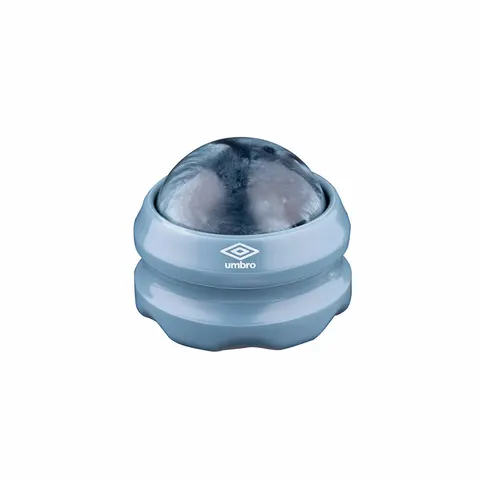
Umbro massage roller ball, blue
A hand-held blue massage roller ball from Umbro: hold the ribbed holder and roll the 360° ball over your muscles like a roll-on.
Price: €7.99incl. VAT, plus shipping
Not available
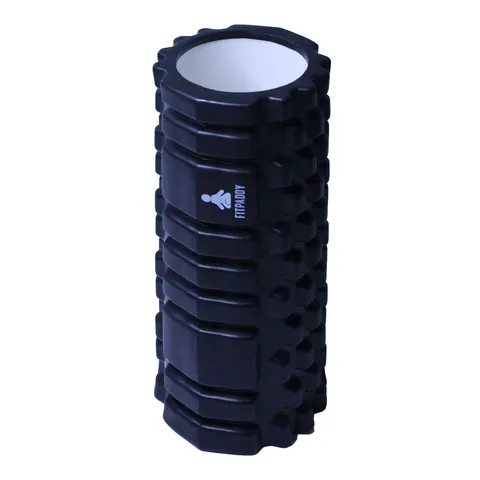
Fitpaddy foam roller MROLLER01, textured EVA, black
A textured EVA foam roller from Fitpaddy with a hollow core, for rolling out legs, glutes and upper back before or after training.
Price: €18.99incl. VAT, plus shipping
Not available
Related articles
Recovery & mobility
Mobility Routine for Beginners: 10 Minutes a Day
A simple 10-minute mobility routine for beginners: 8 moves for hips, spine, shoulders and ankles, with reps, progressions and a 4-week plan.
8min read
Recovery & mobility
How Many Rest Days a Week Do You Need? A Simple Guide
How many rest days a week you need depends on your training, sleep and experience. Sample schedules, signs you need more rest and what to do on rest days.
7min read
Strength training
Warm-Up Sets: How Many to Do and What Weight to Use
How many warm-up sets to do before lifting, what weight and reps to use, and how long to rest, with a simple template and two worked examples in kg.
8min read