
Home Workout Plan for Beginners (No Equipment Needed)
A simple 4-week home workout plan for beginners with no equipment: three short sessions a week, clear progressions, and tips to stay consistent.
Published
The best home workout plan for beginners is a simple full-body routine you can repeat three times a week, in about 30 minutes, with zero equipment. Below you get exactly that: a 4-week plan built on six basic movements (squat, hinge, push, pull, lunge and core), with clear rules for when to make each exercise harder. You don't need a gym, a mat or special clothes. You need a bit of floor space, a sturdy chair, and a plan you will actually follow.
Why a simple plan beats a fancy one
When you start training at home, the temptation is to grab a random 45-minute video and go all-in. That usually ends in two outcomes: you are sore for four days, or you get bored after a week. A beginner plan should do three things:
- Cover your whole body so you build balanced strength.
- Repeat the same exercises long enough to actually get better at them.
- Progress gradually, so each week is slightly harder than the last, but never brutal.
This is the same logic as any good gym programme. If you want the bigger picture of how strength training works, read our strength training for beginners guide. The home plan below is just that idea, adapted to your living room.
What you need (spoiler: almost nothing)
- A clear patch of floor, roughly the length of your body
- A sturdy chair, bench, sofa edge or low step for incline push-ups and step-ups
- A towel or rug if your floor is hard
- Comfortable clothes and supportive shoes (or bare feet on a non-slip surface)
- Optional: a water bottle and a timer on your phone
That's it. If you later want to add gear, our guide to home gym equipment for beginners explains what is worth buying first, and the resistance band workout for beginners is the natural next step once bodyweight gets easy.
Before you start: a quick safety check
Home workouts are low-risk for most healthy adults, but please be sensible:
- If you have a heart condition, high blood pressure, joint problems, are pregnant or recovering from an injury or surgery, talk to your doctor before starting a new exercise programme.
- Stop an exercise if you feel sharp pain, dizziness, chest pain or unusual shortness of breath.
- Mild muscle soreness a day or two after training is normal. Pain in a joint is not something to push through.
The warm-up (5 minutes)
Do this before every session. It raises your body temperature and rehearses the movements you are about to load.
| Exercise | Duration |
|---|---|
| March on the spot, arms swinging | 60 seconds |
| Arm circles, forwards and backwards | 30 seconds |
| Bodyweight good mornings (hands on hips, hinge forward) | 10 reps |
| Slow squats to a comfortable depth | 10 reps |
| Alternating reverse lunges, small range | 6 per side |
| Cat-cow on hands and knees | 8 reps |
If you want a longer routine for stiff hips and shoulders, add a few moves from our mobility routine for beginners.
The six core movements
Each movement has an easier and a harder version. Start with the version where you can do the target reps with good form and feel like you could do two or three more at the end of the set.
1. Squat
- Easier: sit-to-stand from a chair, using your hands if needed
- Standard: bodyweight squat, feet about shoulder-width apart
- Harder: pause squat (hold 2 seconds at the bottom) or split squat
Keep your heels on the floor and your knees tracking roughly in line with your toes.
2. Hinge
- Easier: glute bridge on the floor
- Standard: glute bridge with a 2-second squeeze at the top
- Harder: single-leg glute bridge
The hinge trains the back of your body: glutes and hamstrings. It is the part most people neglect.
3. Push
- Easier: wall push-up
- Standard: incline push-up with hands on a table, bench or sturdy chair
- Harder: knee push-up, then full push-up on the floor
Keep your body in one straight line from head to knees or feet.
4. Pull
Pulling is the hardest pattern without equipment, so here are two practical options:
- Easier: prone "Y-T-W" raises, lying face down and lifting your arms in Y, T and W shapes
- Standard: towel rows. Loop a towel around a sturdy post or a closed, solid door handle on the side the door opens away from you, lean back and row yourself in
- Harder: slower towel rows with a longer lean and a 2-second hold
Only use a door if it is solid, firmly closed, and you are pulling it into its frame. When in doubt, stick to floor raises.
5. Lunge or step-up
- Easier: supported split squat, holding a chair for balance
- Standard: reverse lunge
- Harder: step-ups onto a low, stable step or walking lunges
6. Core
- Easier: dead bug with bent knees
- Standard: forearm plank on knees or toes
- Harder: side plank, or plank with alternating shoulder taps
The 4-week home workout plan
Train three days a week on non-consecutive days, for example Monday, Wednesday and Friday. Do the exercises as a circuit: one set of each exercise in order, then rest 1–2 minutes and repeat.
Week 1: learn the movements
| Exercise | Reps or time | Rounds |
|---|---|---|
| Squat (your level) | 8–10 | 2 |
| Glute bridge | 10–12 | 2 |
| Push-up (your level) | 6–10 | 2 |
| Pull (your level) | 8–10 | 2 |
| Reverse lunge or supported split squat | 6 per leg | 2 |
| Plank | 15–20 seconds | 2 |
Rest 30–60 seconds between exercises if you need it. Focus on smooth, controlled reps. This week should feel moderate, not exhausting.
Week 2: add a round
Same exercises and reps, but do 3 rounds. If week 1 felt easy, add one or two reps per exercise as well.
Week 3: increase the challenge
| Exercise | Reps or time | Rounds |
|---|---|---|
| Squat | 12–15, or move to pause squats | 3 |
| Glute bridge with squeeze | 12–15 | 3 |
| Push-up (try the next harder level) | 6–10 | 3 |
| Pull (your level, slower tempo) | 10–12 | 3 |
| Reverse lunge | 8 per leg | 3 |
| Plank | 25–35 seconds | 3 |
Week 4: consolidate
Keep week 3's structure, but aim to reduce rest between exercises slightly or add one more rep to each set. At the end of week 4, test yourself: count how many squats and push-ups (at your level) you can do in a row with good form. Write it down. That is your baseline for the next block.
What to do on the other days
On your non-strength days, go for a brisk walk, take the stairs, cycle, or try light jogging. If running appeals to you, our guide on how to start running shows how to begin without overdoing it. Keep at least one or two days a week easy or fully restful. Not sure how much rest you need? See how many rest days a week you should plan.
How to progress after week 4
The rule is simple: when you can do the top of the rep range for all rounds with good form, make the exercise slightly harder. You can do that in several ways:
- Add reps (for example, from 10 to 12 to 15).
- Add a round (from 3 to 4).
- Slow down the tempo, for example 3 seconds down, 1 second up.
- Add pauses at the hardest point of the movement.
- Move to a harder variation, like wall push-up to incline to knee to full push-up.
- Reduce rest between exercises.
Change one thing at a time. This is called progressive overload, and it is the engine behind every successful training plan.
Sample weekly schedule
| Day | Activity |
|---|---|
| Monday | Home workout (full body) |
| Tuesday | 20–30 minute brisk walk |
| Wednesday | Home workout (full body) |
| Thursday | Rest or gentle mobility |
| Friday | Home workout (full body) |
| Saturday | Longer walk, bike ride or a sport you enjoy |
| Sunday | Rest |
Common beginner mistakes
- Starting too hard. If you can barely walk the next day, the plan was too much. Scale back and build up.
- Rushing reps. Fast, sloppy reps train less and strain more. Slow down.
- Skipping the pull and hinge. Many home routines are all squats and push-ups. Balance matters for your posture and shoulders.
- Changing the routine every session. You get better by repeating. Stick with the plan for four weeks.
- Holding your breath. Breathe out during the hard part of each rep.
- Ignoring food and sleep. Training is the stimulus, recovery is where progress happens. If you want to understand your energy needs, the TDEE calculator gives you a rough estimate of your daily calories.
How to stay consistent
The plan only works if you do it. A few practical tricks:
- Schedule it like an appointment. Same days, same time.
- Lower the bar on bad days. One round is better than zero rounds.
- Lay out your clothes the night before.
- Track your sessions in a notebook or app. Seeing progress is motivating.
- Pair it with a habit you already have, like right after your morning coffee.
For more on this, read how to build a workout habit, which goes deeper into making exercise automatic.
Your quick-start checklist
- Pick three training days and put them in your calendar
- Clear a patch of floor and find a sturdy chair
- Choose the right starting level for each of the six movements
- Do the 5-minute warm-up before every session
- Follow weeks 1–4, logging reps and rounds
- Test squats and push-ups at the end of week 4
- Progress one variable at a time in the next block
The bottom line
A beginner home workout plan doesn't need to be complicated. Six basic movements, three sessions a week, and small weekly progressions will make you noticeably stronger and fitter within a few weeks. Start easier than you think you need to, stay consistent, and make it a little harder only when your current level feels comfortable. When bodyweight stops being a challenge, add bands or a few pieces of equipment and keep building from there.
FAQ
How many days a week should a beginner work out at home?
Three non-consecutive days a week is a solid starting point. It gives you enough practice to improve and enough rest for your body to adapt.
Can you build strength with home workouts and no equipment?
Yes. Bodyweight exercises build real strength for beginners, as long as you make them gradually harder over time with more reps, slower tempo or harder variations.
How long should a beginner home workout be?
Around 20 to 35 minutes including a warm-up is plenty at the start. Consistency over several weeks matters far more than the length of any single session.
Should I do cardio or strength at home first?
For most beginners a full-body strength circuit is a great base, and you can add brisk walking, stairs or short cardio intervals on other days. Both support overall fitness.
From the shop
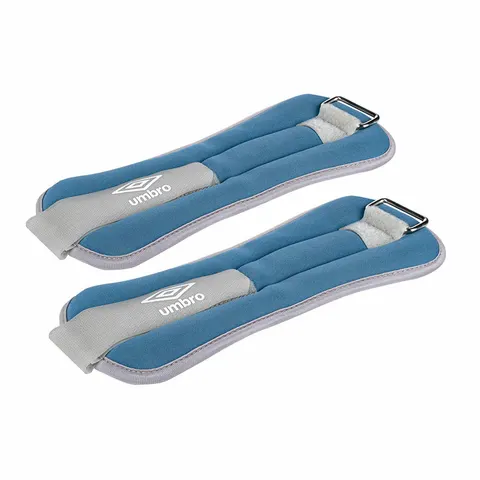
Umbro ankle and wrist weights, 2 × 500 g, blue
Two blue 500 g Umbro cuffs with hook-and-loop straps that add light resistance to leg and arm exercises at home.
Price: €10.99incl. VAT, plus shipping
Not available
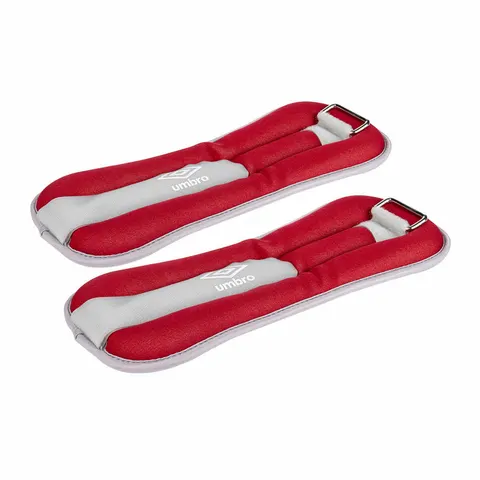
Umbro ankle and wrist weights, 2 × 1 kg, red
A pair of red 1 kg Umbro cuffs with hook-and-loop straps for leg and glute exercises once bodyweight gets easy.
Price: €15.99incl. VAT, plus shipping
Not available
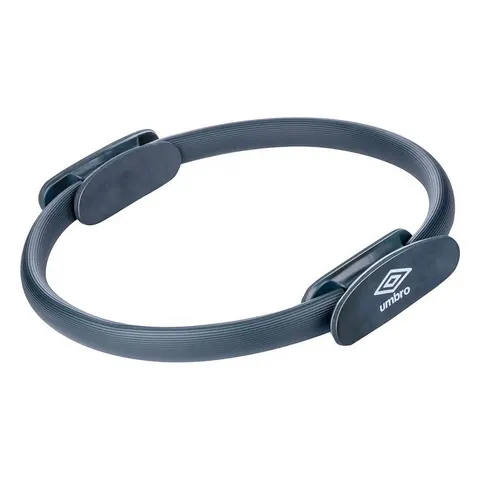
Umbro Pilates ring Ø 39 cm, blue
A 39 cm Umbro Pilates ring with two grips that turns squeezes and presses on the mat into a light resistance workout.
Price: €13.99incl. VAT, plus shipping
Not available
Related articles
Home workouts
Resistance Band Workout for Beginners: Full-Body Plan
A full-body resistance band workout for beginners: 8 exercises, how to pick band tension, a 4-week progression plan and safety tips for home training.
8min read
Home workouts
Home Gym Equipment for Beginners: What to Buy First
Which home gym equipment beginners actually need, what to buy first, what to skip, and how to set up a small, safe training corner on any budget.
8min read
Strength training
Warm-Up Sets: How Many to Do and What Weight to Use
How many warm-up sets to do before lifting, what weight and reps to use, and how long to rest, with a simple template and two worked examples in kg.
8min read