
How to Start Running: A Friendly Beginner's Guide
How to start running from zero: easy first runs, a simple weekly structure, pacing, shoes, breathing and the mistakes that make beginners quit.
Published
The best way to start running is to go slower and shorter than you think you need to: run three times a week, mix short easy jogs with walking breaks, keep the pace conversational, and add a little more running each week. That's it. Most new runners don't quit because running is too hard, they quit because they start too fast, do too much in week one and feel wrecked. This guide shows you how to avoid that and build a running habit that actually sticks.
If you have a health condition, joint pain, are pregnant or haven't exercised in a long time, check with a doctor before you start. Running is wonderfully simple, but a quick check-up is a smart first step.
Why running is a great place to start
Running needs almost nothing: a pair of comfortable shoes, clothes you can move in and a safe route. You can do it from your front door, at any time of day, on your own or with friends. It's also easy to measure. You can see yourself improving week by week, from jogging two minutes without stopping to running twenty or thirty.
There's a catch, though. Running is a high-impact activity. Every stride lands with more force than walking, and your muscles, tendons and bones need time to get used to that. Your heart and lungs often adapt faster than your legs, which is exactly why beginners feel fine and then get sore shins or achy knees after a few weeks of doing too much. The plan below is built around that reality.
Before your first run: a quick checklist
- Shoes: comfortable running shoes that fit well. You don't need the most expensive pair. Our guide on how to choose running shoes walks you through what actually matters.
- Clothes: breathable, not cotton if you can avoid it, and layers in cold weather. Reflective details or a light if you run in the dark.
- Route: a flat, safe loop of a few kilometres. Parks, paths and quiet streets are ideal. A loop means you're never far from home.
- Time slot: pick three days and put them in your calendar like appointments.
- Water: for runs under an hour, drinking normally during the day is usually enough. Take water if it's hot.
- Health check: see the note above if anything applies to you.
The golden rule: easy means easy
Most of your running as a beginner should feel easy. Not "a bit hard but I can manage", but genuinely relaxed. A good test is the talk test: you should be able to speak in full sentences while you run. If you can only gasp out one word at a time, slow down or walk.
Easy running might feel almost embarrassingly slow at first. That's normal. Your pace will come later; right now you're building the base. If you want to see what your current speed actually is, plug a recent run into our running pace calculator, and read our guide to a good running pace for beginners to see why "slow" is often exactly right.
If you like numbers, heart rate is another way to keep easy runs easy. The heart rate zone calculator gives you estimated zones, and heart rate zones explained shows how to use them without obsessing. Many beginners find that keeping most runs in a low zone, as described in our zone 2 training guide, makes running feel much more manageable.
Start with run-walk intervals
Instead of trying to run non-stop from day one, alternate short running intervals with walking. This is the run walk method, and it's one of the friendliest ways to start. You run for a short time, walk to recover, and repeat. Over the weeks the running parts get longer and the walking parts get shorter.
A first session might look like this:
- Walk briskly for 5 minutes to warm up.
- Jog easily for 1 minute.
- Walk for 2 minutes.
- Repeat steps 2 and 3 six to eight times.
- Walk for 5 minutes to cool down.
That's about 30 minutes in total, with 6 to 8 minutes of running. It doesn't sound like much, but it's a perfect starting dose.
A simple 8-week starter structure
This is a gentle progression from your first jog to around 20–30 minutes of continuous easy running. Do each week's session three times on non-consecutive days (for example Monday, Wednesday, Saturday). Every session starts and ends with a 5-minute brisk walk.
| Week | Main session (repeat as listed) | Total running |
|---|---|---|
| 1 | Jog 1 min, walk 2 min × 8 | 8 min |
| 2 | Jog 2 min, walk 2 min × 6 | 12 min |
| 3 | Jog 3 min, walk 2 min × 5 | 15 min |
| 4 | Jog 5 min, walk 2 min × 4 | 20 min |
| 5 | Jog 7 min, walk 2 min × 3 | 21 min |
| 6 | Jog 10 min, walk 2 min × 2, then jog 5 min | 25 min |
| 7 | Jog 12 min, walk 1 min × 2 | 24 min |
| 8 | Jog 20–30 min continuously at easy pace | 20–30 min |
Rules for using the table:
- Repeat a week whenever you need to. If week 4 felt hard, do it again. There's no prize for finishing in exactly eight weeks.
- Never jump ahead because you felt great once. One good day isn't the same as being ready.
- Pain is a stop sign. Normal muscle tiredness is fine. Sharp pain, pain that changes how you move or pain that gets worse during a run is not. Stop, rest, and see a doctor or physiotherapist if it doesn't settle.
Once you can run 30 minutes comfortably, you're ready for a goal. Our 5k training plan for beginners takes you from here to your first 5K race or parkrun-style event.
How to run: simple form cues
You don't need perfect form, and trying to copy elite runners usually backfires. A few simple cues help most beginners:
- Run tall. Imagine a string pulling the top of your head upwards. Look ahead, not at your feet.
- Relax your shoulders and hands. Shoulders down, hands loose as if holding a crisp you don't want to crush.
- Short, light steps. Overstriding (reaching far forward with your foot) tends to feel heavy. Slightly quicker, shorter steps usually feel smoother.
- Land under your body. Try to land with your foot roughly beneath you rather than way out in front.
- Arms swing forward and back, not across your body.
Breathing often feels like the hardest part at the start. Our guide on how to breathe while running covers simple rhythms and what to do if you get a side stitch.
What a typical beginner week looks like
Here's how running fits into a normal week once you're a few weeks in:
| Day | What to do |
|---|---|
| Monday | Run-walk session |
| Tuesday | Rest or easy walk |
| Wednesday | Run-walk session |
| Thursday | Rest, mobility or a short strength session |
| Friday | Rest |
| Saturday | Run-walk session (can be slightly longer) |
| Sunday | Rest or relaxed walk |
Rest days are not lazy days. They're when your body adapts to the training. If you want to know more about how much rest you need, read how many rest days a week. Adding one or two short strength sessions for legs and core is a great complement to running; strength training for beginners is a good place to start.
Warm-up and cool-down
A warm-up doesn't need to be complicated. Five minutes of brisk walking, followed by a few gentle movements, gets your body ready:
- 10 leg swings forward and back per side
- 10 leg swings side to side per side
- 10 walking lunges
- 10 bodyweight squats
- 20 seconds of marching or skipping on the spot
After your run, walk for five minutes to let your breathing settle. Gentle stretching or a short mobility routine afterwards can feel good. Our mobility routine for beginners takes about ten minutes.
Tracking your progress (without getting obsessed)
Tracking keeps you motivated, but beginners do best with simple measures:
- Minutes run per week. This is the most useful number early on. A rough rule of thumb many runners use is to increase weekly running time gradually, by about 10 % or less per week, and to have an easier week every few weeks.
- Longest continuous run. Watching this grow from 1 minute to 20 is hugely motivating.
- How you feel. Note energy, soreness and sleep. If you're always tired, you're doing too much.
Pace and distance are fun to look at but they bounce around with weather, hills and sleep. Don't judge a single run by its pace. If you want to understand what your watch is telling you, the running pace calculator converts between pace, time and distance in kilometres or miles.
Common beginner mistakes (and how to avoid them)
Running too fast
The number one mistake. If every run feels like a battle, slow down until you can talk. You'll get faster by running easy consistently, not by racing every session.
Doing too much too soon
Feeling great in week two and doubling your distance is a classic way to end up with sore shins. Follow a gradual plan and resist the urge to skip ahead.
Running every day
Your legs need recovery days, especially at the start. Three runs a week is plenty.
Ignoring pain
Muscle tiredness is normal. Joint pain, sharp pain or pain that makes you limp is not. Rest, and get it checked by a doctor or physiotherapist if it persists.
Wearing worn-out or badly fitting shoes
Comfort and fit matter more than brand or price. See our running shoe guide.
Comparing yourself to others
Your neighbour's pace or a friend's marathon has nothing to do with your progress. Compare yourself to your own week one.
Staying motivated when the shine wears off
Weeks three to five are often where motivation dips. The novelty is gone and the big wins haven't arrived yet. A few things help:
- Make it social. Run with a friend or join a beginner-friendly running group.
- Set a small goal. A local 5K, a charity run or simply "run 20 minutes non-stop by the end of next month".
- Lower the bar on bad days. On days you don't feel like it, promise yourself just ten minutes. You'll often keep going, and if not, ten minutes still counts.
- Plan your runs ahead. Clothes ready the night before, run in the calendar, route decided.
For more ideas on making exercise automatic, read how to build a workout habit.
Your next steps
- Pick three days this week and block them in your calendar.
- Do week 1 of the starter structure above, with a 5-minute walk before and after.
- Keep every run conversational. Walk whenever you need to.
- Repeat weeks as often as you like until running 20–30 minutes feels comfortable.
- Then choose a goal, like the 5k training plan for beginners.
Starting to run is less about willpower and more about patience. Go easy, be consistent, and let the weeks do the work. You'll be surprised how far you can go.
FAQ
How often should a beginner run?
Three sessions a week on non-consecutive days is a good start. It gives your body regular practice plus a rest day between runs to adapt.
How long should my first run be?
Think in minutes, not kilometres. Twenty to thirty minutes of mixing short jogs with walking breaks is plenty for a first session.
Is it okay to walk during a run?
Yes. Walking breaks are a widely used beginner strategy, not cheating. They let you run more total minutes with less strain and build fitness steadily.
Should I see a doctor before I start running?
If you have a heart condition, high blood pressure, joint problems, are pregnant, have been inactive for a long time or have any health concerns, talk to a doctor before you start a new exercise programme.
From the shop
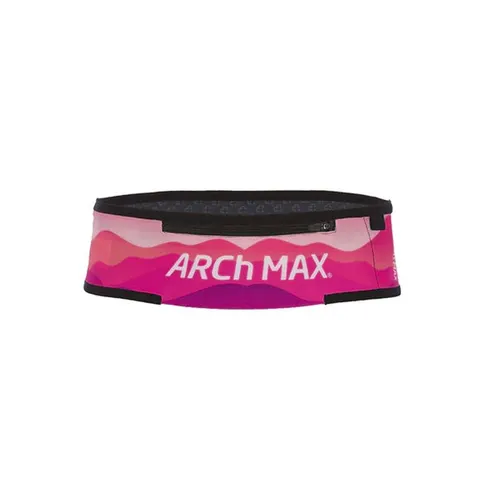
ARCh MAX Belt Pro Zip running belt, pink, size L-XL
A light Lycra running belt with five pockets, a zipped front pocket for a large phone and pole loops, in pink, size L-XL.
Price: €15.99incl. VAT, plus shipping
Not available
Softee Freshly thermal bottle 750 ml, stainless steel, black
A black 750 ml stainless steel thermal bottle from Softee (Jim Sports) with a leak-proof lid, for the gym, the padel court and your working day.
Price: €6.99incl. VAT, plus shipping
Not available
4F sports headband U035, grey
A simple grey one-size headband from Polish sportswear brand 4F for running, trail and gym sessions.
Price: €9.99incl. VAT, plus shipping
Not available
Related articles
Running & cardio
The Run Walk Method: How It Works and How to Start
The run walk method explained: how to pick run and walk intervals, sample ratios for beginners and races, and how to progress to longer running blocks.
7min read
Running & cardio
How to Breathe While Running: Simple Tips for Beginners
How to breathe while running without gasping: nose vs mouth, belly breathing, rhythm patterns, side stitches and drills that make easy runs feel easier.
7min read
Running & cardio
Treadmill Pace Chart: Convert km/h and mph to Pace
Treadmill pace chart: convert km/h or mph into minutes per km or mile, the simple formula, worked examples, and whether a 1% incline really matters.
9min read