
Home Gym Equipment for Beginners: What to Buy First
Which home gym equipment beginners actually need, what to buy first, what to skip, and how to set up a small, safe training corner on any budget.
Published
The home gym equipment beginners really need is short: a comfortable mat, a set of resistance bands, and either adjustable dumbbells or one or two kettlebells. With those three things (plus your own bodyweight) you can train every major muscle group for months. Everything else, such as a bench, a pull-up bar or a rack, is a "nice to have" that becomes useful later, once you know which kind of training you enjoy and will stick with.
This guide walks you through what to buy first, what to add later, and what to skip entirely, so you spend money on gear that actually gets used instead of gear that collects dust.
Start with the question: what will you train?
Before you buy anything, be honest about how you want to work out. The right equipment depends on it.
- General fitness and toning: bodyweight plus resistance bands covers almost everything.
- Building strength and muscle: adjustable dumbbells or kettlebells become important because you need weight you can increase over time.
- Cardio and conditioning: a jump rope is cheap and effective; big cardio machines are a much larger commitment.
- Mobility and recovery: a mat, a foam roller and maybe a band are all you need.
If you are brand new, start with our home workout plan for beginners. It needs no equipment at all, and after four weeks you will know much better what to buy next.
The beginner home gym: three tiers
Think of your home gym in stages. Only move to the next stage when you are using the current one regularly.
| Tier | Equipment | What it unlocks | Rough space needed |
|---|---|---|---|
| 1. Starter | Exercise mat, resistance bands (loop and long bands), jump rope | Full-body training, warm-ups, mobility, cardio | About 2 × 1 m |
| 2. Strength | Adjustable dumbbells or 1–2 kettlebells, a sturdy flat bench or step | Progressive strength training for all muscle groups | About 2 × 2 m |
| 3. Expansion | Doorway pull-up bar, more weight, foam roller, possibly a rack and barbell later | Pull-ups, heavier lifts, more variety | From 2 × 2 m up to a dedicated room |
Rough budget guide (prices vary a lot by country, quality and second-hand availability, so treat this only as a loose orientation): tier 1 is usually the cheapest by far, tier 2 is a moderate investment, and tier 3 can range from modest to very expensive depending on whether you add a rack and barbell.
Tier 1: the essentials
Exercise mat
A mat makes floor exercises like planks, glute bridges and stretches more comfortable and stops you sliding. Look for:
- Enough length for your whole body when lying down
- A non-slip surface on both sides
- A thickness that feels stable, not squishy. Very thick, soft mats are good for stretching but wobbly for standing exercises
Resistance bands
Bands are the most underrated piece of home gym equipment. They are light, cheap, portable and surprisingly versatile. Two types are worth having:
- Mini loop bands (short, flat loops) for glute work, lateral walks and warm-ups.
- Long bands, either loops or tube bands with handles, for rows, presses, pulldowns and assisted exercises.
Bands usually come in sets with different resistance levels, which lets you progress. Our resistance band workout for beginners shows a complete routine using just bands.
Jump rope
A simple rope gives you an efficient cardio option in a small space. Start with short intervals, for example 20 seconds on, 40 seconds off. If you have joint issues or a low ceiling, brisk walking or marching on the spot is a fine alternative.
Tier 2: equipment for building strength
Once bodyweight and bands start to feel easy for the main lifts, you need weight you can increase step by step. This is what keeps your strength improving over months. The strength training for beginners guide explains why that gradual increase matters.
Adjustable dumbbells vs. fixed dumbbells vs. kettlebells
| Option | Pros | Cons | Best for |
|---|---|---|---|
| Adjustable dumbbells | Many weights in one compact pair, easy to progress | Bigger upfront cost; some mechanisms are slower to change | Most beginners with limited space |
| Fixed dumbbells | Durable, quick to grab, simple | A full set takes a lot of space and money | People with room who train often |
| Kettlebells | Great for swings, goblet squats, carries; very durable | Fewer weight steps, so progression comes in bigger jumps | Conditioning and full-body training |
What weight to choose? It depends heavily on your current strength, so there is no universal number. A useful approach: pick a weight for goblet squats and rows that you can lift for 10–12 controlled reps while feeling like you could do 2–3 more. Adjustable dumbbells solve this problem because you can start light and go up. Once you are lifting regularly, the one rep max calculator can help you estimate your strength and plan your training weights.
A sturdy bench or step
A flat bench adds a lot of exercises: dumbbell bench press, step-ups, split squats, supported rows, hip thrusts. Make sure it is:
- Stable, with a wide base that doesn't wobble
- Rated for your body weight plus the weights you plan to lift
- At a comfortable height for sitting and stepping
No bench yet? A low, stable step or a solid box can handle step-ups and incline push-ups. Never use wobbly furniture or anything on wheels.
Tier 3: nice to have later
Doorway pull-up bar
Great for pulling strength, but only if your door frame is suitable. Read the manufacturer's instructions carefully and check that the frame is solid. Use a band for assisted pull-ups or start with hanging and negative reps.
Foam roller
Many people like rolling as part of a warm-up or cool-down because it feels good. Treat it as a comfort tool, not a fix for injuries. Combine it with our mobility routine for beginners.
Rack, barbell and plates
This is the classic home gym setup, and it is fantastic if you love barbell training. But it needs space, a solid floor, safety arms or spotter bars, and a real commitment. Most beginners are better served by waiting until they have trained consistently for several months.
What to skip (at least for now)
- Gadgets promising "spot reduction", like belly fat belts or vibrating plates sold for fat loss. You cannot burn fat from one specific area by working that area.
- Large cardio machines bought on impulse. They are expensive, bulky and often end up as clothes racks. Try walking, cycling outdoors or a jump rope first.
- Huge all-in-one machines before you know your preferences.
- Very cheap, unrated equipment for anything you put your full weight on. Safety first.
How to set up your training corner
- Pick a spot with a clear floor area and enough ceiling height to raise your arms overhead.
- Check the floor. Hard floors may need a mat or rubber tiles to protect them and reduce noise.
- Keep it visible. Equipment you can see gets used more than equipment in a closet.
- Store it safely. Dumbbells and kettlebells on the floor or a sturdy rack, never somewhere they can fall.
- Mind your neighbours. Avoid jumping exercises late at night if you live in a flat.
- Ventilate. Open a window or use a fan, and keep water nearby.
A simple starter routine with tier 1 and 2 equipment
| Exercise | Equipment | Sets × reps |
|---|---|---|
| Goblet squat | 1 dumbbell or kettlebell | 3 × 8–12 |
| Romanian deadlift | Pair of dumbbells | 3 × 8–12 |
| Floor or bench press | Dumbbells, bench optional | 3 × 8–12 |
| One-arm row | Dumbbell, bench or step for support | 3 × 8–12 per side |
| Band pull-apart | Long band | 2 × 15 |
| Dead bug | Mat | 2 × 8 per side |
Do it two or three times a week with at least one rest day in between. Add weight or reps when the top of the range feels manageable. Plan your rest days with the help of how many rest days a week.
Common mistakes when building a home gym
- Buying everything at once. Start small and add equipment when you hit a real limit.
- Buying weights that are too heavy. You will progress, but start where good form is easy.
- Ignoring safety. Wobbly benches, worn bands and unsuitable door frames cause accidents. Inspect your gear regularly and replace bands that show cracks or tears.
- No plan. Equipment doesn't make you fitter, training does. Pair your gear with a structured routine.
- Forgetting nutrition and recovery. Building strength also depends on eating enough. Our guide on how much protein per day is a good place to start.
Your home gym checklist
- Decide what kind of training you will actually do
- Clear a space of roughly 2 × 2 m
- Buy a mat and a resistance band set first
- Train consistently for 4–8 weeks
- Add adjustable dumbbells or a kettlebell when bands and bodyweight feel easy
- Add a bench or step for more exercise options
- Consider a pull-up bar or rack only after months of regular training
The bottom line
Home gym equipment for beginners should be simple, safe and versatile. A mat, resistance bands and adjustable dumbbells or kettlebells cover nearly everything you need to get fit and strong at home. Buy in stages, choose quality for anything that carries your weight, and remember that the plan you follow matters far more than the gear you own. If you have any health concerns or injuries, check with a doctor or physiotherapist before you start loading weights.
FAQ
What is the first piece of home gym equipment a beginner should buy?
For most people a set of resistance bands or a pair of adjustable dumbbells is the best first purchase. Both are versatile, compact and let you progress well beyond bodyweight training.
Do I need a squat rack at home as a beginner?
No. A rack is only necessary once you lift heavy barbells. Beginners can make excellent progress with bodyweight, bands, dumbbells or kettlebells.
How much space do I need for a home gym?
A clear area of roughly 2 by 2 metres is enough for bodyweight, band and dumbbell training. You need room to lie down and move your arms freely without hitting furniture.
Are cheap fitness gadgets worth buying?
Usually not. Devices that promise targeted fat loss or effortless results rarely deliver. Spend your budget on simple, durable tools you can load progressively.
From the shop
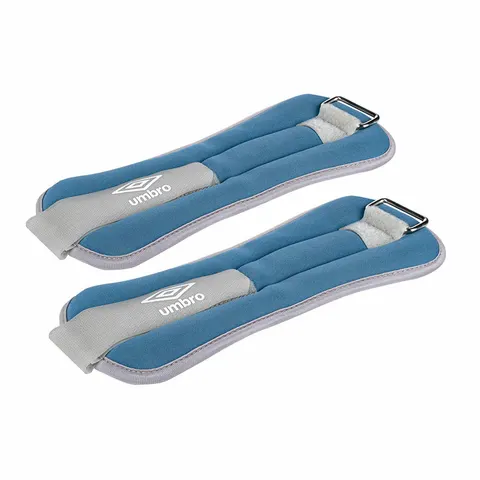
Umbro ankle and wrist weights, 2 × 500 g, blue
Two blue 500 g Umbro cuffs with hook-and-loop straps that add light resistance to leg and arm exercises at home.
Price: €10.99incl. VAT, plus shipping
Not available
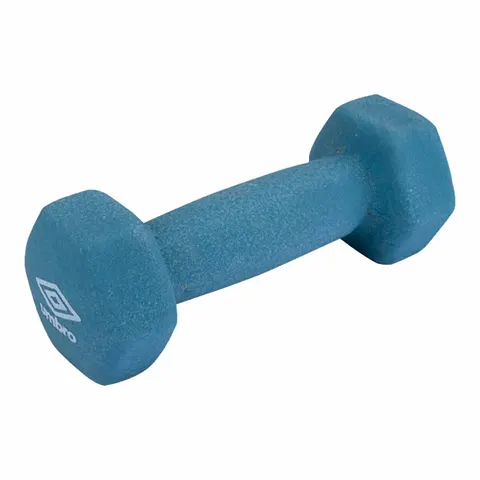
Umbro dumbbell 1 kg, coated, single
One light 1 kg Umbro dumbbell with a coated surface for arm and shoulder exercises, warm-ups and toning sessions at home.
Price: €7.99incl. VAT, plus shipping
Not available
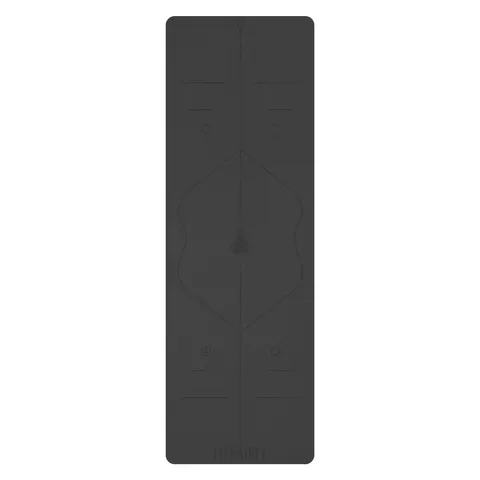
Fitpaddy yoga mat MAT01BL, TPE, 183 × 61 cm, black
A 6 mm TPE yoga mat from Fitpaddy with alignment lines, a carry cord and a weight under 1 kg, in black.
Price: €22.99incl. VAT, plus shipping
Not available
Related articles
Home workouts
Resistance Band Workout for Beginners: Full-Body Plan
A full-body resistance band workout for beginners: 8 exercises, how to pick band tension, a 4-week progression plan and safety tips for home training.
8min read
Home workouts
Home Workout Plan for Beginners (No Equipment Needed)
A simple 4-week home workout plan for beginners with no equipment: three short sessions a week, clear progressions, and tips to stay consistent.
9min read
Strength training
Warm-Up Sets: How Many to Do and What Weight to Use
How many warm-up sets to do before lifting, what weight and reps to use, and how long to rest, with a simple template and two worked examples in kg.
8min read