
How Long to Wait After Eating Before Exercising
How long to wait after eating before you exercise: timings for big meals, small meals and snacks, what to eat before a workout and how to find your own rhythm.
Published
As a general guide, wait about 3–4 hours after a large meal and about 1–3 hours after a small meal or snack before you exercise. Many people can also eat a small, light snack, such as a banana, shortly before a workout without problems. The exact timing depends on how much you ate, what you ate, how intense the session is and how your stomach reacts, so use these numbers as a starting point and adjust them to how you feel.
The timings above follow widely used guidance, for example from Mayo Clinic's tips on eating and exercise. Below you will find what changes the waiting time, practical snack ideas, how to handle morning workouts and a simple way to find the timing that works for you.
The quick answer: waiting times by meal size
| What you ate | Typical wait before exercise | Examples |
|---|---|---|
| Large meal | About 3–4 hours | A full plate of pasta with sauce, a big restaurant meal |
| Small meal | About 1–3 hours | A sandwich, a bowl of oats with fruit, rice with vegetables |
| Small, light snack | About 1 hour, for many people less | A banana, a yogurt, a slice of toast with honey |
| Drink only | Little or no wait | Water, a small glass of juice |
If you are unsure, start with the longer end of each range and shorten it step by step. It is easier to learn that you can eat closer to training than to find out the hard way that you cannot.
Why exercising on a full stomach can feel bad
After a meal, your body is busy digesting. When you start exercising hard, more blood flows to your working muscles, and a full stomach can feel heavy, sloshy or uncomfortable. Common complaints are:
- a heavy, sluggish feeling
- nausea or acid reflux
- cramps or an urgent need for the toilet
- side stitches, especially when running
None of this is usually dangerous for healthy people, but it can ruin a session. Side stitches are a typical example: many runners notice them more often after a large meal or a lot of fluid. Our guide on how to breathe while running explains what to do if one hits you mid-run.
Eating too little before a hard workout has its own downside: you may feel weak, light-headed or run out of energy halfway through. The goal is to find a middle ground: enough energy, but nothing sitting heavily in your stomach.
What changes the waiting time
The type of exercise
Sports with a lot of up-and-down movement shake your stomach more. Many people need a longer gap before running, jumping rope or high-intensity intervals than before cycling, rowing or strength training. A relaxed walk after a meal is usually comfortable for most people.
The intensity
The harder the session, the less your stomach likes being full. An easy jog or a light mobility session tends to be fine sooner than intervals, a hard leg day or a race.
What is on your plate
Large portions take longer to settle. Meals that are high in fat or fibre, very rich or very spicy also tend to sit in the stomach longer. Meals built mainly around easy-to-digest carbohydrates, with a moderate amount of protein, usually feel lighter before training.
Your own stomach
Some people can run 45 minutes after lunch without a problem. Others need four hours. Both are normal. Your training log is a better guide than any rule.
What to eat before a workout
If your last full meal is more than a few hours away, a small snack 1–2 hours before training can help. Good options are simple, familiar and not too large:
- a banana or another piece of fruit
- natural or fruit yogurt
- a slice of toast or a rice cake with honey or jam
- a small bowl of oats
- a fruit smoothie
- a few crackers or a small cereal bar
Focus mainly on carbohydrates, which are your muscles' quickest fuel source, with a little protein if it suits you. Save large portions of fatty or very fibre-rich food for after your session.
For short, easy workouts of 30–45 minutes, you often do not need a special snack at all, as long as you have eaten normally during the day.
Morning workouts: eat first or train on an empty stomach?
Mornings are tricky because there is not much time between waking up and training. A few practical options:
- Small breakfast, then wait: Mayo Clinic's guidance suggests finishing breakfast at least one hour before a morning workout. A slice of toast, a banana or a small yogurt works for many people.
- A light snack only: if you only have 20–30 minutes, a few bites of something light, such as half a banana, may be enough.
- Nothing before short, easy sessions: some people feel completely fine doing an easy run or a short strength session before breakfast. If you feel dizzy, shaky or weak, eat something first next time.
If you have diabetes or take medication that affects your blood sugar, are pregnant, or have a digestive condition, talk to your doctor or a registered dietitian about how to time meals and exercise. This guide is general information, not individual advice.
Worked examples: planning food around a session
These are hypothetical days, not prescriptions.
| Situation | Plan |
|---|---|
| Lunch at 12:30, run at 17:30 | Plenty of time after lunch. If hungry around 16:00, a banana or yogurt. |
| Breakfast at 7:00, strength training at 8:00 | A small breakfast (toast, yogurt or oats) and keep the portion moderate. |
| Big dinner at 19:00, wanted to train at 20:00 | Swap to an easy walk tonight, or eat a lighter dinner earlier on training days. |
| Long Saturday run at 9:00 | Wake up a little earlier and finish a small breakfast by about 7:30–8:00. |
Notice the pattern: you can either move your meal, change the size of the meal or change the type of session. You do not need to give up training because you ate.
Drinking before and during exercise
Fluids usually pass through your stomach faster than food, but gulping a large amount right before a run can still feel sloshy. Drink normally through the day and have a glass or two in the hours before training. Mayo Clinic's guidance mentions roughly 2 to 3 cups (about 470–710 ml) of water during the 2 to 3 hours before a workout, then small amounts during it. In heat or during long sessions you need more. Sip rather than gulp.
Eating after your workout
After training, there is no need to rush, but a regular meal with both carbohydrates and protein within about two hours fits most routines well and helps you recover. If your workout ends close to a normal mealtime, that meal does the job. Our guide on how much protein per day shows how to cover your daily needs across meals.
Eat enough overall
Meal timing is fine-tuning. What matters more is that you eat enough over the whole day for your training. If you regularly feel drained in workouts, struggle to recover or are hungry all the time, your total intake may be too low. The TDEE calculator gives you a rough estimate of your daily calorie needs, and our article on how to calculate maintenance calories explains how to check and adjust that number.
Find your own timing in four steps
- Start conservatively: about 3 hours after a large meal, 1–2 hours after a snack.
- Test on easy sessions: never try a new pre-workout food or a shorter gap before a hard session or a race.
- Write it down: what you ate, when, the type of session and how your stomach felt.
- Shorten the gap gradually if you felt fine, or lengthen it if you did not.
After a few weeks, you will know your personal pattern. Many new runners find this especially useful when they start running and are still figuring out their routine.
Common mistakes
- Training hard right after a large meal and blaming the workout for feeling terrible.
- Never eating before long or hard sessions and running out of energy halfway through.
- Trying a new food on race day or before an important workout.
- Drinking a large amount right before a run.
- Overthinking it. For easy, short sessions, eating normally during the day is usually enough.
Checklist
- Large meal: about 3–4 hours before exercise
- Small meal or snack: about 1–3 hours before
- Light snack right before only if it agrees with you
- Mostly easy-to-digest carbohydrates before training
- New foods and timings tested on easy sessions first
- A meal with carbohydrates and protein within about two hours after
- Enough food over the whole day for your training
There is no single perfect waiting time. Start with the general guidelines, pay attention to how your body reacts, and adjust until training feels light and energetic rather than heavy or empty.
FAQ
How long should I wait after a big meal before working out?
A common guideline, used for example by Mayo Clinic, is to eat large meals at least 3 to 4 hours before exercising. A gentle walk is usually fine sooner, but running or intense training on a full stomach often feels uncomfortable.
Can I exercise right after a snack?
Many people can eat a small snack shortly before exercise without problems, especially something light like a banana or a yogurt. Test it on an easy session first, because tolerance varies from person to person.
Is it bad to run right after eating?
It is not dangerous for most healthy people, but running with a full stomach can cause discomfort, nausea or a side stitch. Waiting one to a few hours depending on the meal size usually makes runs feel better.
Should I eat before a morning workout?
It depends on the session and on you. For harder or longer sessions, a small breakfast finished at least an hour before helps many people. For short, easy sessions, some people feel fine without eating. If you feel dizzy or weak, eat something first.
From the shop
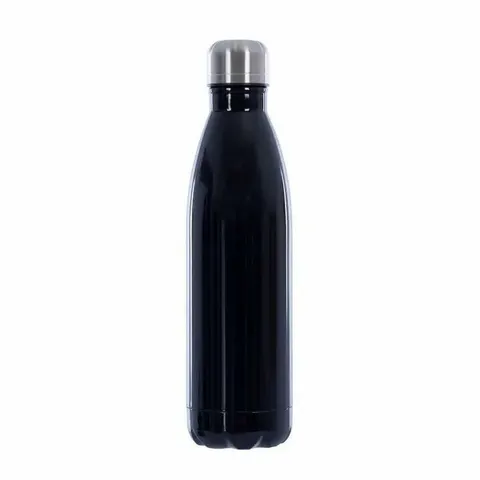
Softee Freshly thermal bottle 750 ml, stainless steel, black
A black 750 ml stainless steel thermal bottle from Softee (Jim Sports) with a leak-proof lid, for the gym, the padel court and your working day.
Price: €6.99incl. VAT, plus shipping
Not available
Related articles
Sports nutrition
How Much Protein Per Day Do You Need When Training?
How much protein per day you need when you train: commonly cited ranges per kg, worked examples, a simple meal plan and protein-rich foods.
8min read
Sports nutrition
How to Calculate Maintenance Calories (Step by Step)
Learn how to calculate maintenance calories with the Mifflin-St Jeor formula, activity multipliers and worked examples, then fine-tune the result.
8min read
Strength training
Warm-Up Sets: How Many to Do and What Weight to Use
How many warm-up sets to do before lifting, what weight and reps to use, and how long to rest, with a simple template and two worked examples in kg.
8min read